Duct Leakage Tests for New Residential Construction
Independent duct leakage tests for new residential construction in New Jersey, eastern Pennsylvania, and Delaware, generally within approximately two hours of Mount Laurel. Availability is confirmed for your exact project address.
What Does a Duct Leakage Test Measure?
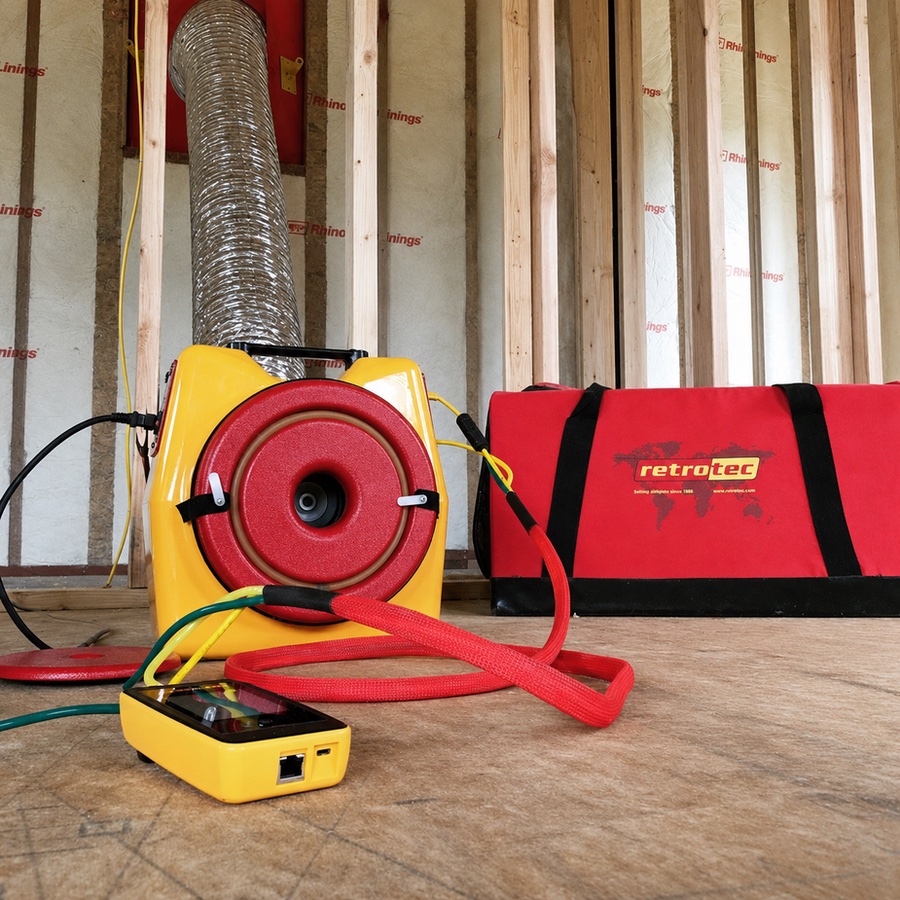
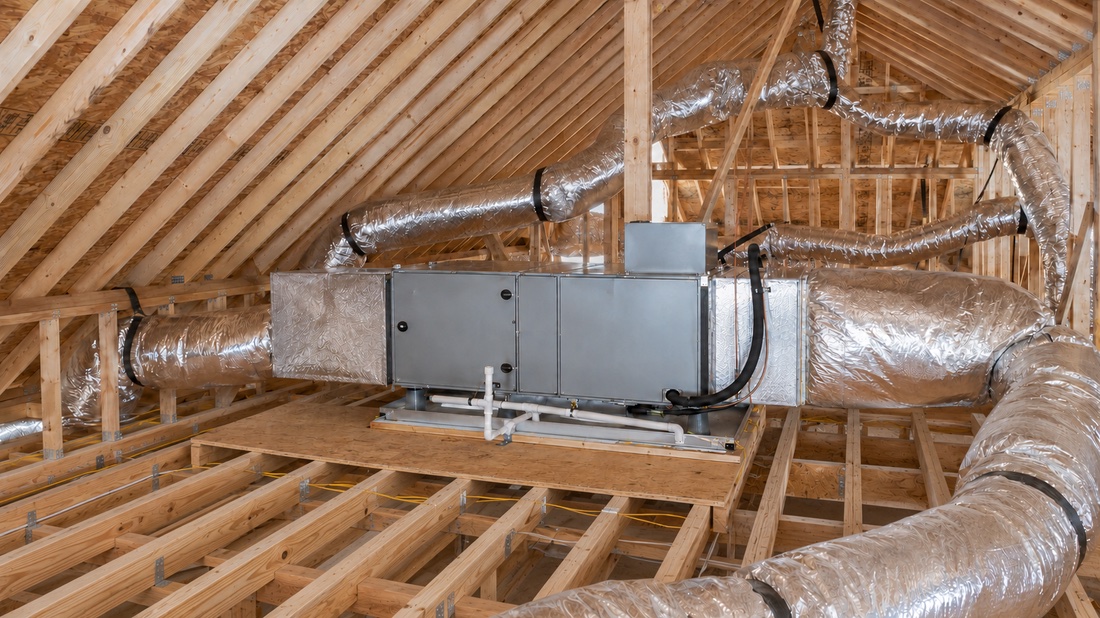
A duct leakage test measures how much air escapes through joints, seams, connections, and equipment in an HVAC duct system. A calibrated duct-testing fan pressurizes the system to 25 pascals while the supply and return openings are temporarily sealed. The measured airflow is reported in CFM25 and compared with the conditioned floor area served by the system to determine whether it meets the applicable target.
For new residential construction, the result verifies whether the installed ductwork meets the required airtightness level.
Are Duct Leakage Tests Required in
New Jersey and Pennsylvania?
Yes. Covered new residential construction generally requires a duct leakage test, although the applicable requirements depend on the state, approved code edition, duct-system configuration, and test stage.
New Jersey adopted the 2024 IECC with state amendments effective August 17, 2026. During the six-month grace period, a complete permit application may be submitted under the previously adopted 2021 IECC. Duct leakage requirements and passing limits differ between the two code editions, so the approved code edition must be confirmed before the test.
Pennsylvania generally does not require a duct leakage test when all ducts and air handlers are located entirely within the building thermal envelope. A separate exception applies to qualifying ventilation ducts that are not integrated with the heating or cooling system.
See our Test Requirements page for current limits, exceptions, and official code sources.
Is the Duct System Ready for a Duct Leakage Test?
Schedule the test after the required ductwork has been installed and sealed. Contact Keystone if you are unsure whether the system is ready for rough-in or post-construction testing.
Keystone handles temporary sealing, equipment setup, system pressurization, measurement, and documentation on site.
- All supply and return ductwork, boots, plenums, and connections for each system being tested are installed and sealed.
- Supply and return openings are accessible and ready to be temporarily sealed.
- Air handlers are installed for post-construction testing. Tell Keystone in advance if scheduling a rough-in test before an air handler is installed.
- Electrical power is available, and air handlers, mechanical rooms, attics, and crawlspaces are accessible.
Current plans or the project’s conditioned floor area and volume are available.
Also Need a
Blower Door Test?
When the enclosure and duct systems are ready, Keystone can usually complete both tests during the same appointment.
Ready to Schedule Your Duct Leakage Test?
Book online or call to confirm the test stage, system count, and project readiness.